 Skip to content
Complete Guide
Japanese Car Japan to Bahamas 🇧🇸
Japanese Car Japan to Bahamas: The Ultimate 2026 Import Guide
Importing a high-quality, fuel-efficient Japanese car from Japan to the Bahamas is one of the smartest financial moves a Bahamian driver can make. Japanese vehicles dominate the roads of New Providence and Grand Bahama due to their unmatched mechanical reliability and low running costs. By bypassing third-party importers and sourcing your vehicle directly from overseas auction houses, you can save thousands of dollars on your next ride.
This comprehensive guide breaks down the legal eligibility criteria, real-time shipping costs, customs tariffs, and the step-by-step paperwork pipeline required for successful delivery. Whether you are aiming for a compact daily commuter or a spacious family SUV, our breakdown ensures a seamless experience.
Before diving into the detailed regulations below, we recommend opening our real-time Japanese Car Bahamas Import Duty Calculator in a separate tab to get an instant landed cost projection tailored to your specific budget.
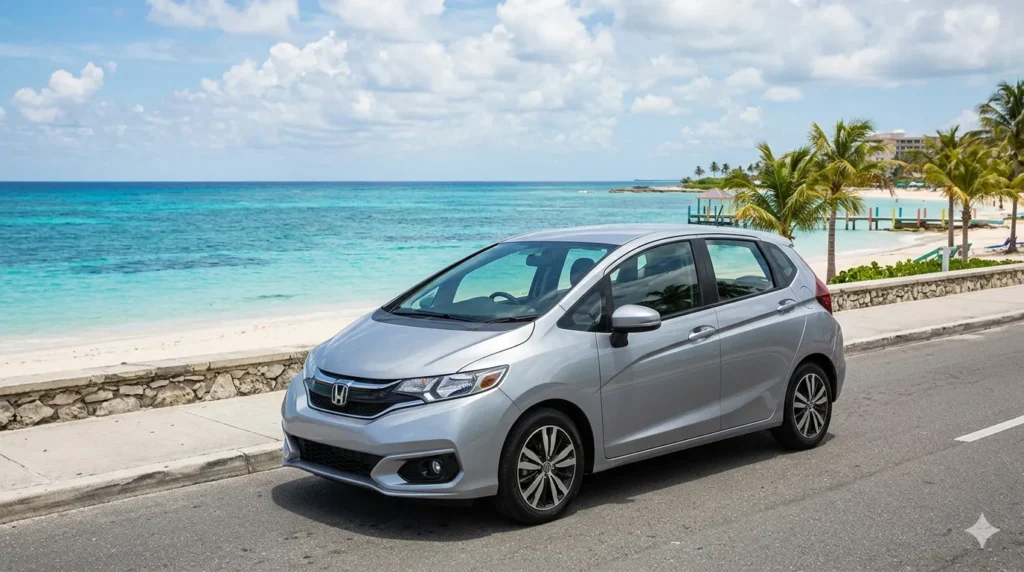
Is It Legal to Import a Car from Japan to the Bahamas?
Yes, it is entirely legal for individuals and corporate entities to import a car from Japan to the Bahamas. The entire cross-border framework is regulated and governed by the Bahamas Customs Department alongside the Ministry of Finance. Importers do not require a specialized commercial import license for private vehicles, but they must strictly comply with national age limits and structural safety mandates.
Every imported vehicle must pass through formal border entry controls, clear customs assessments, and receive prompt safety approval from the Road Traffic Department before it can legally turn a wheel on public roads.
Bahamas-Specific Steering & Traffic Rule
The Bahamas presents a unique driving environment that catches many first-time importers off guard. Traffic in the Bahamas drives strictly on the left-side of the road, a historic layout inherited from British colonial administration. However, because of the country’s geographical proximity to the United States, the government legally prefers Left-Hand Drive (LHD) vehicle configurations.
Despite this official preference, Right-Hand Drive (RHD) vehicles from Japanese auction houses are fully legal to import, register, and drive throughout the archipelago. Driving an RHD vehicle on left-side lanes is highly natural, making affordable Japanese imports an exceptionally popular choice across Nassau and the Family Islands.
Vehicle Eligibility Requirements for The Bahamas
Navigating the compliance framework is critical to prevent your vehicle from being turned away or seized at the border. The government maintains strict red lines regarding age and structural history.
The 2026 Compliance Checklist
Maximum Vehicle Age: 10 Years Maximum from the exact date of manufacture. In 2026, your vehicle must have been manufactured in 2016 or newer.
Steering Configuration: Both Right-Hand Drive (RHD) and Left-Hand Drive (LHD) are legally permitted.
Fuel Type Allowances: Standard gasoline and diesel passenger vehicles are permitted without specialized emissions limits.
Hybrid Vehicles: Fully allowed. Enjoy significant customs duty discounts if the vehicle value sits under a specific threshold.
Electric Vehicles (EVs): Fully allowed. Eligible for the lowest tax brackets to encourage green energy transitions.
Engine Capacity Limits: No statutory displacement cap, but customs duty rates scale steeply based on total vehicle value.
Banned vehicle histories: Vehicles bearing a Certificate of Destruction, Salvage Title, or Non-Rebuildable Title are completely prohibited from entry.
The Import Sweet Spot: The absolute ideal import for the Bahamas is a 2017 to 2020 manufacture year vehicle. Sourcing within this range guarantees a highly modern car with advanced fuel efficiency while capitalizing on Japanese depreciation curves, keeping your initial FOB auction purchase price remarkably low.
CRITICAL WARNING: Do not rely on the first registration date listed on export documents. The Bahamas Customs Department evaluates age strictly by the physical manufacture date. Always cross-reference the chassis number on a Japanese production database before placing an auction bid.
PRO TIP: If you plan to import a vehicle for commercial transport use (such as a taxi, tour car, or livery services), you can apply to the Ministry of Finance for a Customs Duty Exemption Waiver before the vehicle enters the country, potentially saving you thousands in upfront taxes.
Ready to check if your target model complies? Use our Interactive Vehicle Eligibility Tool to instantly match chassis codes against active Bahamian import laws.
Shipping from Japan to the Bahamas Ports, Methods & Cost
Shipping vehicles across the globe requires trusted logistics corridors. Cars departing Japan typically set sail from major maritime hubs, including Yokohama, Kobe, Nagoya, Osaka, and Moji.
Primary Destination Ports: Port of Nassau (Arawak Cay) and Port of Freeport.
Average Transit Time: 35 to 50 days, depending on carrier schedules and weather windows.
Special Shipping Route Note: Vessels travel east across the Pacific Ocean, transit directly through the Panama Canal, and move north through the Caribbean Sea to berth in the Bahamas.
Maritime Freight Logistics Comparison
| Shipping Method | Estimated Cost (USD) | Average Transit Time | Ideal Vehicle Profile |
| Roll-On / Roll-Off (RoRo) | $900 – $1,400 | 35 – 45 Days | Standard sedans, compact hatchbacks, and stock SUVs. |
| Container Shipping (20ft/40ft) | $2,500 – $4,000 | 40 – 50 Days | Luxury vehicles, classic collectibles, or multi-car dealer lots. |
PRO TIP: Opt for Roll-On/Roll-On (RoRo) shipping whenever possible. It is significantly cheaper than container freight, and because vehicles are driven directly onto specialized internal decks, loading and unloading at the Arawak Cay port in Nassau is substantially faster.
WARNING: The Atlantic hurricane season runs actively from June 1st through November 30th. Shipping during these months can occasionally trigger transit delays at sea or brief port closures in Nassau. Ensure your marine insurance package features comprehensive storm coverage.
To calculate accurate freight rates for your specific car model, utilize our Landed Shipping Cost Estimator.
Import Duty & Full Tax Breakdown for The Bahamas
The Bahamas has a unique tax structure that differs significantly from most Caribbean nations — there is no income tax, no VAT, and no sales tax in the Bahamas. Instead, the government raises substantial revenue through import duties, making the duty on vehicles one of the highest single-transaction taxes Bahamians pay.
The Bahamas Customs Department administers vehicle import duties under a rate structure that varies by vehicle value. Here is the complete real-money breakdown:
Full Landed Cost Example — $8,000 FOB Vehicle
| Fee | Rate | Amount (USD) |
|---|---|---|
| FOB Price (Japan auction) | — | $8,000 |
| Freight — RoRo (Yokohama–Nassau) | — | $1,200 |
| Marine Insurance (1%) | — | $92 |
| CIF Value | — | $9,292 |
| Import Duty (standard passenger vehicle) | 45% of CIF | $4,181 |
| Environmental Levy | 1% of CIF | $93 |
| Stamp Tax | 2% of CIF | $186 |
| Nassau Port Handling Fee | Fixed | $300 |
| Bahamas Customs Processing Fee | Fixed | $75 |
| Clearing & Forwarding Agent Fee | ~1.5% of CIF | $139 |
| Vehicle Inspection Fee | Fixed | $80 |
| Bahamas Registration Fee | Fixed | $150 |
| ━━━━━━━━━━━━━━━━━━━━━━━━━━━━ | ━━━━━ | ━━━━━━━ |
| TOTAL LANDED COST | ~$14,496 | |
| In Bahamian Dollars (BSD) | ~BSD 14,496 |
Note: The Bahamian Dollar (BSD) is pegged 1:1 to the US Dollar, making cost calculations straightforward for Bahamian importers — BSD 1 = USD 1 always.
Key Bahamas Duty Rate Structure:
- Passenger vehicles (standard): 45% of CIF
- Electric vehicles (EV): 25% of CIF significant incentive
- Hybrid vehicles: 35% of CIF meaningful reduction
- Commercial vehicles: 2535% of CIF
- Vehicles over 20 years (classic): 45%+ with additional inspection fees
EV & Hybrid Tip: The Bahamas offers one of the most attractive EV import duty rates in the Caribbean just 25% for full electric vehicles versus 45% for standard petrol. Hybrid vehicles attract 35%. On an $8,000 CIF vehicle, choosing a hybrid saves approximately $930 USD in duty. Choosing a full EV saves approximately $1,860 USD. The Bahamas government is actively encouraging electrification take advantage of this.
WARNING: The BSD/USD 1:1 peg means your cost calculations are straightforward but also means there is no currency advantage or disadvantage versus USD pricing. The duty amounts you calculate in USD are exactly what you pay in BSD. Budget precisely and leave no room for surprises.
Use our free Japan to Bahamas Car Import Calculator for your exact duty calculation choose your fuel type to see the EV, hybrid, or petrol duty rate applied automatically.
Step-by-Step Import Process Japan to the Bahamas
Importing a car involves a specific order of operations. Missing a step can lead to significant delays or financial penalties.
1.Establish Budget and Targets:Day 1.
Calculate your ultimate spending ceiling. Remember that your final local landed cost will roughly double the initial Japanese auction purchase price due to shipping and the 45% to 65% customs duties.
2.Source and Bid via Auction:Days 2–7.
Register with a reputable Japanese vehicle exporter. Review comprehensive auction sheets, verify grading numbers (prefer Grade 3.5, 4, or B), and place your maximum bid limits.
3.Verify Manufacture Date:Day 8.
Once you win the bid, input the unique chassis number into an online database. Confirm that the exact manufacture month fits comfortably within the strict Bahamian 10-year limit.
4.Settle the Invoice:Days 9–11.
Pay the exporter via an international Bank Telegraphic Transfer (TT). Obtain a formal payment receipt confirming that your funds have safely cleared into Japan.
5.Process Export Logistics:Days 12–15.
The exporter secures the official Japanese Export Certificate and books the vehicle onto the next available RoRo shipping vessel transiting through the Panama Canal.
6.Track Maritime Transit:Days 16–55.
Receive your scanned tracking documents. The ship sails across the Pacific, clears the Panama locks, and heads north toward the Caribbean basin.
7.Appoint a Local Broker:Week 5.
While the ship is at sea, contact a licensed customs broker in Nassau or Freeport. Provide them with early copies of your paperwork to prepare the entry filing.
8.Secure Customs Clearance:Day of Arrival.
Upon port arrival, your broker submits the formal customs declaration entries. Pay all calculated import duties, processing fees, environmental levies, and 10% VAT directly to Bahamas Customs.
9.Obtain Port Release:1–2 Days Post-Arrival.
Present your stamped customs clearance receipts to the port authority operators at Arawak Cay to settle local handling fees and secure physical release of the vehicle.
10.Complete Road Traffic Inspection:Within 48 Hours.
Tow or drive the car directly to the nearest Road Traffic Department facility. Technicians will check your lights, brakes, emissions, and chassis safety metrics.
11.Register and Plate:Same Day.
Pay the local registration fees, submit your structural inspection certificate, and collect your official Bahamian license plates and registration decals.
12.Drive Home!:Final Step.
Fit your new license plates onto your freshly imported car, confirm your local auto insurance policy is fully active, and enjoy your new ride!
Required Import Documents The Bahamas Complete Checklist
To ensure a smooth customs clearance process without facing costly container demurrage or port storage fees, assemble these documents well before the vessel arrives in port:
Original Japanese Export Certificate: Issued by Japan’s Ministry of Land, Infrastructure, Transport and Tourism (MLIT).
English Translation of Export Certificate: Crucial for customs verification of vehicle specifications.
Original Bill of Lading (BoL): Issued by the shipping line, detailing freight terms and tracking metrics.
Commercial Purchase Invoice: Issued by the exporter, proving the exact FOB price paid.
Marine Insurance Certificate: Validating transit insurance value.
Bahamas Customs Value Declaration (Form C-43): Formal valuation breakdown completed by you or your broker.
Valid National Photo Identification: Your current Bahamian Passport or National Driver’s License.
Taxpayer Identification Number (TIN): Required for all formal VAT tax accounting processing.
DOCUMENTATION WARNING: Ensure the spelling of your name matches identically across the Bill of Lading, Commercial Invoice, and National ID. Even minor typographical errors can prompt customs officers to hold your vehicle at the port until amendments are filed with the shipping line in Japan.
PRO TIP: Request that your Japanese exporter send all original physical paperwork via express couriers like DHL or FedEx at least two weeks prior to the ship’s scheduled arrival date. This gives your local clearing agent plenty of time to process pre-arrival filings.
Top 10 Japanese Vehicles Imported to the Bahamas
These highly rated models offer an ideal mix of compact sizing for historic Nassau streets, exceptional fuel efficiency, and readily available local spare parts.
Toyota Vitz / Yaris – The undisputed king of Bahamian city commuting. It offers incredible fuel economy, low maintenance costs, and retains excellent resale value locally.
Honda Fit – Famous for its versatile “Magic Seat” interior configuration. It handles tight urban parking spaces effortlessly while providing surprising interior cargo volume.
Toyota Passo – An ultra-compact hatchback built for tight budgets. It delivers rock-bottom auction purchase prices and exceptional miles-per-gallon efficiency.
Nissan Note – Highly sought after for its smooth ride and roomy cabin. The e-Power hybrid variant provides outstanding fuel efficiency for daily stop-and-go city traffic.
Suzuki Swift – Brings a sporty look and agile handling to local driving. It features robust suspension mechanics that handle rough road patches reliably.
Toyota Prius – The go-to model for fuel-conscious buyers. It benefits from low 10% import duty rates, making it an incredibly affordable long-term option.
Honda Vezel / HR-V – A highly popular compact SUV that offers elevated ground clearance. Perfect for navigating occasional localized road flooding during heavy rainstorms.
Toyota RAV4 – A robust, family-sized crossover known for its reliable engine performance. It holds up exceptionally well against salty coastal air conditions.
Nissan Dualis / Qashqai – Delivers mid-sized SUV interior comfort at a highly accessible price point, making it a favorite for growing families.
Mitsubishi Outlander – Provides practical three-row seating capabilities. It offers great value for drivers who need extra passenger space without the high costs of a full-sized truck.
7 Expert Tips to Reduce Your Import Cost to the Bahamas
Bahamas
Tip 1: Prioritize Hybrids and EVs First – Take advantage of the government’s green incentives. Choosing a hybrid or EV drops your base customs duty rate from 45% down to just 10%, instantly saving you thousands of dollars.
Tip 2: Aim for the 7-to-9-Year Age Bracket – Target vehicles manufactured between 2017 and 2019. They have cleared the steep initial depreciation curves in Japan but still comply with the 10-year import age limit.
Tip 3: Always Choose RoRo Shipping – Avoid costly container freight unless you are importing a high-value luxury vehicle. Roll-On/Roll-Off shipping is the most cost-effective option for standard passenger cars.
Tip 4: Study the Auction Sheet Closely – Stick to clean auction grades like 3.5 or 4. Avoid buying cheap cosmetic-fix vehicles that might carry hidden structural or salt-water flood damage.
Tip 5: Partner with an Authorized Broker – Don’t try to handle port clearance on your own. Hiring an experienced, licensed local customs agent helps you avoid costly calculation errors and port storage penalties.
Tip 6: Double-Check All Document Details – Ensure all names and chassis serial numbers are listed identically across every piece of paperwork before the vessel arrives.
Tip 7: Calculate Total Costs Before Bidding – Never place an auction bid without mapping out your shipping costs, duties, levies, and local port fees ahead of time.
Frequently Asked Questions (FAQs)
Q1: How long does it take to ship a car from Japan to the Bahamas?
Total transit time ranges between 35 to 50 days. The journey includes overland tracking within Japan, ocean shipping across the Pacific, clearing the Panama Canal locks, and traveling up to the ports of Nassau or Freeport.
Q2: Can I legally import a right-hand drive (RHD) car into the Bahamas?
Yes. While the Bahamas officially prefers Left-Hand Drive configurations, Right-Hand Drive vehicles are fully legal to import, clear through customs, register with the Road Traffic Department, and drive on public roads.
Q3: What is the maximum vehicle age limit for Bahamas imports?
The maximum allowable vehicle age is 10 years from the exact date of manufacture. To import a vehicle successfully, it must have been manufactured in 2016 or newer.
Q4: Is a pre-export PVoC inspection required for the Bahamas?
No, the Bahamas does not require a mandatory pre-export inspection (such as JEVIC or QISJ) in Japan. However, your vehicle must pass a standard mechanical roadworthiness and safety inspection at the local Road Traffic Department upon arrival.
Q5: What is the cheapest Japanese car to import to Nassau?
Compact hatchbacks like the Toyota Passo or early compliant editions of the Toyota Vitz are typically the most budget-friendly choices. You can often source these at Japanese auctions for an FOB price between $1,500 and $2,500, resulting in a final local landed cost of around $5,500 to $7,000 after all duties and shipping are settled.
Q6: Do hybrid and electric vehicles get duty discounts in the Bahamas?
Yes, they do. Hybrid and electric vehicles with an original value under $70,000 qualify for a highly favorable 10% customs duty rate, offering significant savings compared to the standard 45% to 65% tariffs applied to conventional gasoline engines.
Q7: Do I need a licensed customs clearing agent in Nassau?
While it is technically possible to clear a private import yourself, hiring a licensed customs broker is highly recommended. Professional agents understand the EDI electronic entry systems, which helps prevent costly valuation delays or processing errors at the port.
Disclaimer
saving money. As long as you choose a model that complies with the 10-year age limit, verify its manufacture date, and budget carefully for the 45% to 65% customs duties and 10% VAT, you can import a vehicle to Nassau or Freeport with complete confidence. Keeping these regulations in mind ensures a smooth, predictable import process from start to finish.
Ready to Calculate Your Exact Landed Costs? Skip the manual math and guesswork. Use our comprehensive Bahamas Car Import Cost Calculator to get an all-inclusive breakdown of your shipping fees, customs duties, environmental levies, and local taxes in under 60 seconds. No account needed. No signup. Results in under 60 seconds.
